

What is CPR?
How cardiopulmonary resuscitation keeps blood and oxygen moving until help arrives, and how to give hands-only CPR.
What CPR does
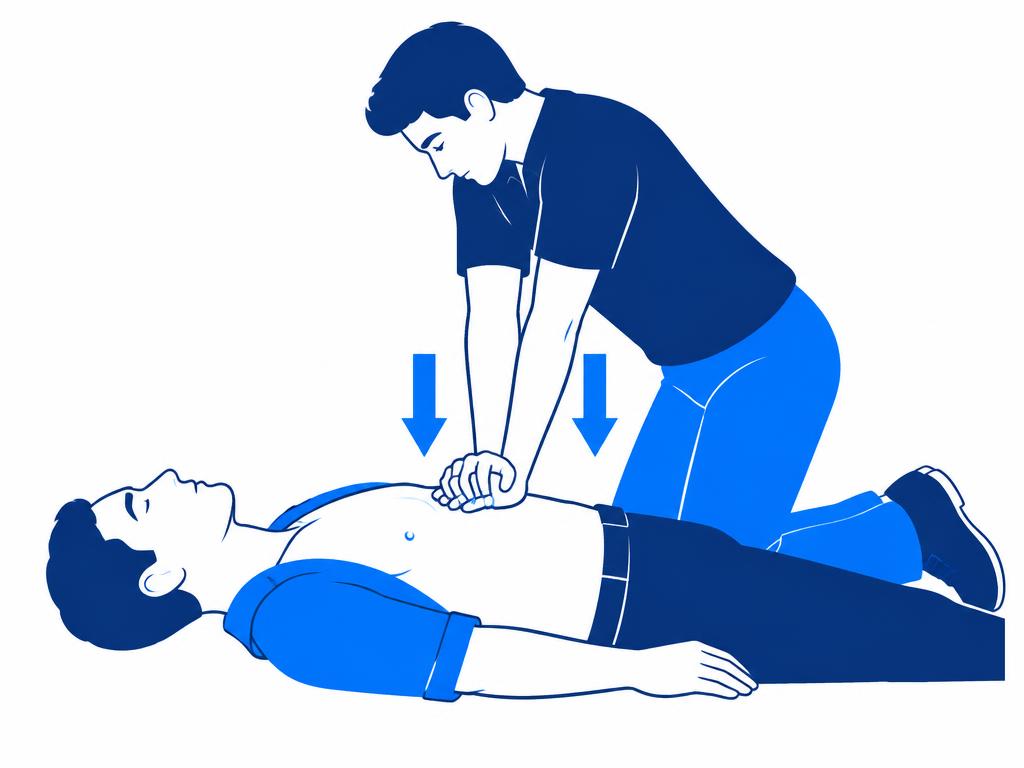
CPR (cardiopulmonary resuscitation) is an emergency procedure used when someone's heart stops beating. Chest compressions push blood to the brain and vital organs, buying time until an AED and emergency medical services arrive. Without CPR, the chance of survival drops by about 7–10% for every minute that passes.
The Chain of Survival
- 1Recognize cardiac arrest and call 911
- 2Start high-quality CPR right away
- 3Use an AED as soon as one is available
- 4Advanced care from EMS
- 5Hospital and post-cardiac arrest care
- 6Recovery
Hands-only CPR for adults
- 1Check the scene is safe, then tap the person and shout: "Are you OK?"
- 2If they don't respond and aren't breathing normally, call 911 and send someone for an AED.
- 3Place the heel of one hand in the center of the chest, other hand on top.
- 4Push hard and fast: at least 2 inches deep, 100–120 times per minute.
- 5Let the chest come all the way back up between compressions.
- 6Keep going until help or an AED arrives, or the person starts breathing.
Adults, children and infants
- Adults: two hands, at least 2 inches deep.
- Children: one or two hands, about 2 inches deep.
- Infants: two fingers or two thumbs, about 1½ inches deep.
- For children and infants, rescue breaths are especially important — this is covered in training.
Using an AED
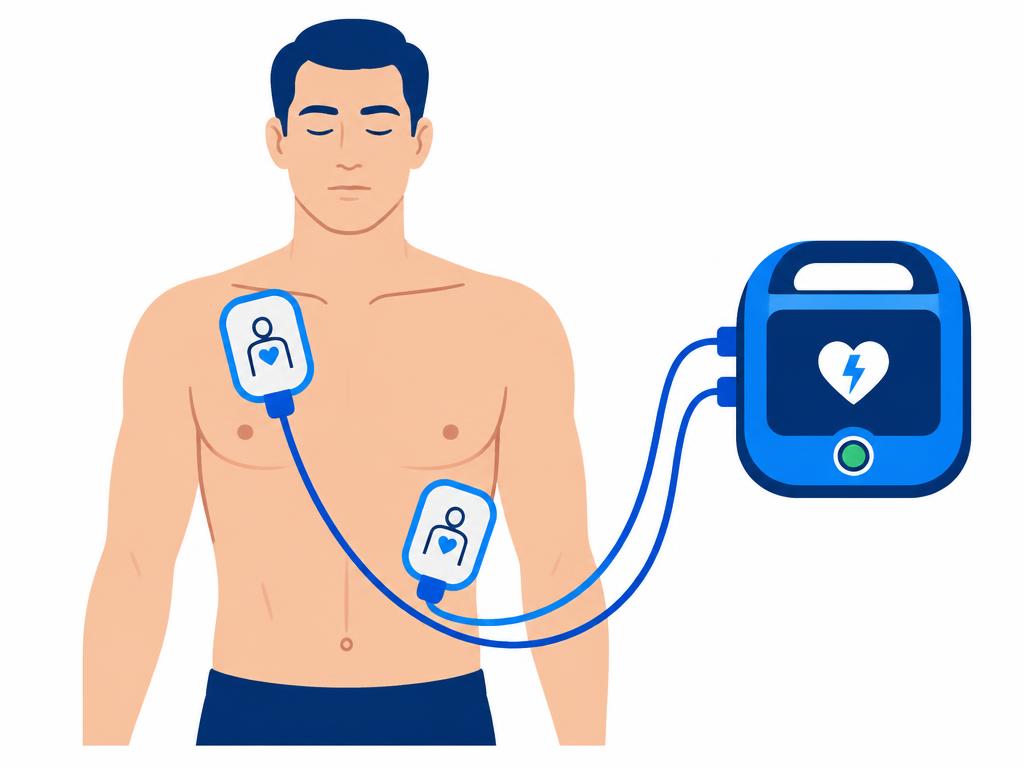
An automated external defibrillator (AED) checks the heart's rhythm and can deliver a shock to restore a normal beat. Turn it on and follow the voice prompts. Place one pad on the upper right chest and one on the lower left side, stand clear while it analyzes, and resume CPR right after any shock.
This guide is for general education and is not a substitute for hands-on training with a certified instructor. In an emergency, call 911.